Monday, April 17, 2006

Art: Another Reason to Homeschool

This was originally posted at my other site, Twice Bloomed Wisteria.

Art is frequently sacrificed (other than coloring pages) in lieu of basic skills training in public elementary schools, but in a homeschool children have the freedom to explore art, art history, and artists. I take this freedom seriously. Maybe I just have an obsession with art supplies and need an excuse to purchase more, but doing art with my children just makes me feel satisfied. Boys at scouts and children who visit our home are mesmerized my the options, quality, and variety of art stuff available at our house. They are able to let their imaginations soar by painting, drawing, sculpting, creating mosaics, inventing catapults, airplanes, and boats with balsa wood . . . They all ask, "Where did you get this stuff?" I get to say, "We homeschool, and all this is part of our school." Then, with an envious look the child says, "I wish I could go to school here." Satisfaction -- satisfaction that my children, who are curious about public school, feel that they have a good situation and satisfaction that my children are learning so much without even realizing it.

I didn't have my schooling plans solidified when we began homeschooling. We do a quasi classical/Charlotte Mason/unschooling contortion thing for school now, but this method has evolved over five years . I would have loved to incorporate historical art study with history, but I re-acted my first year instead of planning. I have purchased and used, and purchased and put on a shelf many art resources. I will share some of these so perhaps you will not have to purchase blindly, as I did.
  • We started with Child Sized Masterpieces. These are just sets of postcards, which unfortunately you have to cut apart. The children then play matching and sorting games with the cards. The guide How to Use Child-size Masterpieces by Aline D. Wolf gives suggestions about arranging the cards, care of the cards, and activities. Honestly, I didn't use the book much but I did scan it. I also didn't store the cards with as much care and reverence as they suggest. I used a book ring and hole punched the cards. We do enjoy the cards, even after four years because the artists and art for each set of cards was thoughtfully chosen and you can sort and arrange the cards in many different ways -- by painter, art schools, chronologically, naming the artist. I mostly just leave them on a table and someone picks them up and looks.
  • Art Basics for Children by Rich and Sharon Jefferies is an A to Z guide for art concepts and technique written for elementary age children. A is for apple and the lesson is drawing an apple and shading. Z is for zebra and you learn to draw an animal using ovals. The book is not a commercial publication and is copied/printed in black and white and bound with binding combs. Layout and design is not beautiful, but the information is good and can be used as a resource or an art curriculum.
  • Meet the Masters is my all time favorite. More expensive than many programs, but well worth the money, especially if you are not a seasoned artist. This program consists of a html program on a CD and binder for the teacher. The CD provides a slide show with good resolution art images, some sound bytes, and an ending quiz or slide show for each artist. The binder includes the script for the slides shown on the CD, activity/technique pages, and the instructions for the master work production. My children have produced beautiful works of art(a Van Gogh, a Remington, a Mondrian, and a O'Keefe) and have a wonderful appreciation and knowledge of the artists we have studied. I produced some wonderful pieces, too! Now we must wait for the next artist group, before we can continue with the program.
  • The Story of Painting by Sister Wendy Beckett is an enormous (736 pages) reference volume and is just good to have. It is referenced chronologically which makes it quite useful for the classical homeschooler. The hard cover, paper quality, narrative, and zooms make it a wonderful study and a nice coffee table book. It is well worth the money.
  • Getting to Know the World's Greatest Artists Series by Mike Venezia are wonderful paperback books loaded with images, large print narrative, and a few comics. They are just right for the elementary art student, but have enough information for older students. We don't have all of these, but wish we did.
  • Lives of the Artists by Kathleen Krull is a humorous book with short stories about various artists. These are anecdotal in nature. If you can only get one book, this is not it. Though the information is interesting, you don't get a full picture of the artist, the art, or the movement.
  • Looking at Pictures by Joy Richardson is a wonderful introduction to art museums and the role they play in preservation, types of painting, painting techniques, and stories in painting. This is a short book, only 79 pages, but is loaded with information and beautiful images. I like this book and with a practice component or artist study could be the spine of a year of art.
  • Art Fraud Detective by Anna Nilsen is a fun sleuth game in a book, where the child (7 and over) seeks forgeries by comparing the catalog images to the art in the museum. I found all the forgeries.
  • For times when you just need or want to let the children color, The Start Exploring Masterpieces coloring book by Mary Martin and Steven Zorn provides stories about the paintings and somewhat detailed coloring pages. Crayons are not perfect for this coloring book, use markers or colored pencils instead.
  • Online Resources - Try Princeton online Art Lessons. If you don't find what you need Doc has compiled her usual mega-list of resources here. Thanks Doc!
Next year, I will have the chronological classical plan up and running, thanks to Art Smart! by Susan Rodriguez. This chronological plan, complete with slides, begins with the stone age. These activities require a bit more planning and sometimes more real art materials. They are appropriate for the 9 to 13ish group. Making a cave art gallery out of a refrigerator box might lose its appeal with the older children and some of the activities are beyond the fine motor skills of the under 9. There are only 20 activities for ancient art so there is still time for artist study or enrichment of some sort.

I am so happy I get to share these art experiences with my children. Art enriches our daily lives and we have so much fun. Even on those days when structured school seems overwhelming, we can look at pictures, read about artists, and create our own works of art and have that satisfied, a job well done, feeling.

Saturday, April 8, 2006

Reading Good Books

This entry was originally posted at my other site, Twice Bloomed Wisteria.

One of the most wonderful benefits homeschooling offers is the time and flexibility to explore timeless books. Some books just cannot be scheduled. They must be read when they are discovered, in their entirety, and with passion. I have been reading to my children since birth and will continue to do so (even though they are becoming readers) until they shove me out of the bed or off the couch. I love sharing books at bedtime or on the porch swing or on the couch or . . . I have abdicated some reading responsibility as they have grown, but will continue to find time to read as long as they want me.

We have read thousands of books and it seems that each good book leads to another. We read The Sign of the Beaver by Elizabeth Speare and Johnny Tremain by Esther Forbes last year for history. Both mentioned Robinson Crusoe by Daniel Defoe. My son had to read that book last summer. We don't always follow literary allusion or recommendations of characters to books. Sometimes we follow authors. My son loved The Adventures of Huckleberry Finn, so we have also read Tom Sawyer. My daughter enjoyed The Little Princess by Frances Burnett last year, so this year we read The Secret Garden. Other times we follow stories through to their conclusions by reading a series like the Harry Potter novels by J.K. Rowling, The Chronicles of Narnia by C. S. Lewis or The Little House series by Laura Ingals Wilder.

We also find books through our study of history by reading historically significant literature. We studied the Civil War this year and read The Red Badge of Courage by Stephen Crane and Across Five Aprils by Irene Hunt. We are reading Gay Neck:The Story of a Pigeon for WWI study and plan to read The Hiding Place by Corrie ten Boon and Anne Frank: Diary of a Young Girl for WWII. My little ballerina also led us to Shakespeare's A Midsummer Night Dream. After watching the ballet, I suggested we read the play (I would have found an excuse to read Shakespeare even if she had hated the ballet).

Once you start reading good books there is no where to stop. The question is where to start. I love book lists. I check several, periodically, to make sure we haven't forgotten some wonderful, age appropriate, historically appropriate or just perfect piece of literature. Here is a smattering of the lists I use to help guide my children's reading and enjoyment of literature.
  • Honey for a Child's Heart by Gladys Hunt -- My sister in law gave this book to me years ago and I still enjoy it. Though her lists are not exhaustive or organized as I sometimes need them I have come back to this book many times because Gladys Hunt chooses quality. Over 1/2 the book is commentary on the importance of reading quality books. If you are just starting and have young children, the commentary can confirm your ideals and cement your plans in reality.
  • Let the Authors Speak by Carolyn Hatcher -- This book organizes titles historically by reading levels, type of book, and location. Having all this information at your fingertips is indispensable if you like to structure some historical fiction and non fiction with your history study. There is little commentary. Three fourths of the book is comprised of lists sorted by period, title and author.
  • The Literature Teacher's Book of Lists by Judie Strouf is an older book. I got it in my past life as a literature teacher. This book does not stop at lists of books but has an assortment of other "useful" or maybe "useless" information. Book lists are sorted by age, classics, popular, fiction, non-fiction, autobiography, comics, and on and on and on.
  • The Story of the World Activity Guides by Susan Bauer and others -- I bought the first two of these and used them quite a bit. I don't like blind ordering from the library and enjoyed the historically significant literature choices. After the second activity book the activities and book choices seem sloppy and somewhat haphazard. The Guides do have lists of books by chapter significance, but the information is somewhat vague and the books are often redundant. You shouldn't have to read the same book each time you go to China in history.
  • For free online lists try these:

    • Award winning book lists -- Though these are the source of exhaustive official ALA lists, the format is not great. They are difficult to read and print. This list does not have the all important short summaries for each listing.
    • Newbery Books -- Each entry has a short summary and winners are divided by century. The Caldecott Medal Books are accessible from this page, but are not organized for printing as you have an extra click so that you only get one book per page.
    • The Great Books Academy -- This online school provides lists for great books and good books arranged by grade level.
    • Great Books Online -- This list is for the older student and for people who don't mind reading online or printing books. The list is free and so are the books!
    • Ambleside Online -- AO has reading lists for each grade level. Click on the grade level of your children and scroll down to the bottom for literature and free reading selections. They also have an alphabetical by authors list.
    • Finally, though many of the books on these lists are drivel, here is the resource for the much touted Accelerated Reader program. I sometimes use these to find a grade level.
Armed with lists, I feel I can choose books that will make a lasting impression on my children, fill their minds with questions, and lead them to more books.

Saturday, April 1, 2006

Nature Study

This was originally posted on my other site, Twice Bloomed Wisteria.

Spring is a natural for nature study. You only have to step outside to hear the almost obscene symphony of bird courtship rituals, see flowers blooming and trees leafing, feel rivers and streams gushing, and find tadpoles and frog eggs. Take advantage of your child's natural desire to be outside and live nature study. It's never too early to start.

We've been doing nature study since my children were born, though I didn't realize it as an organized "real school" subject until this year. We just walk, look, and talk. Finding snakes, alligators, beaver huts, fox holes, and nests of eggs in the wild and learning to respect the animals and their habitats is the official lesson, but mostly we just look, listen, and enjoy. Granted, not everyone has the wild so close at hand, but nature is everywhere if we are patient enough to find it. Here are a few things I have learned in the past ten years of nature study.

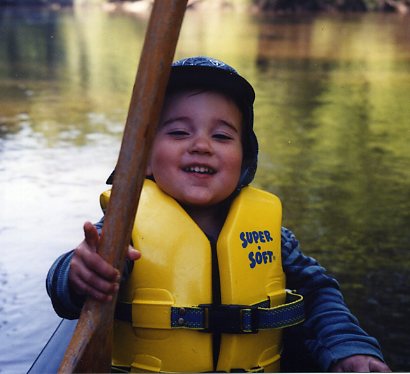
  • Babies love to be outside and I think they learn about nature even when tiny. I let mine stay outside on a blanket as much as possible. I back country hiked when my first was four months old and took him overnight canoeing when he was two. He loved it!
  • Let the child lead. Children are closer to the ground and unbelievably observant and therefore able to find small treasures you might miss like a salamander, crystals in rocks, mushrooms, and bugs. Even if they are too young to identify species they are learning to find beauty in nature and to interact with nature in a positive way.
  • Let the child set the pace. I have to watch myself here. I have a tendency to rush (combining exercise and nature). Children can spend much time watching ants carry loads and snakes sunning. They learn more from watching nature than listening to you drone on and on about the details.
  • Let your child explore freely, yet safely. Be aware of your surroundings and hidden dangers like posisonous mushrooms.
  • Don't give all the information you know or can produce from the guidebook to small children. If they need to know something they will ask. Do provide basic observations and comparisons.
  • Teach your child respect for animals' wildness, personal space, and habitat. Some adults need this lesson too. When hiking in Glacier National Park the trail crossed the highway where several cars were pulled over to look at a grizzly bear. One woman took her camera and started trekking up the side of the hill to get a better picture (despite all the warnings in the park). She put herself at risk and that bear at risk. Luckily, a ranger showed up and dragged her down the mountain.
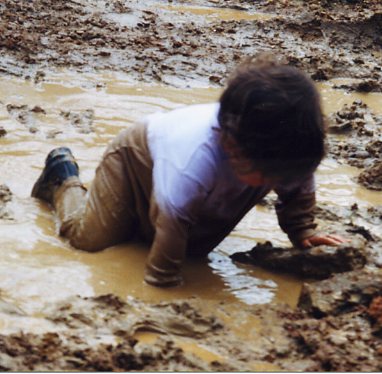
  • I may carry this a bit too far, but clothes can be washed so let them get dirty. Feeling mud squish through toes and fingers, making clay bricks, and rolling in the grass are learning experiences too!
  • Children don't melt. Let them play in the rain if lightening is not a problem. Teach them respect for weather, not fear.
  • Nature happens everywhere. Every city has a park (not a researched point). Take advantage of them and the zoos, natural science museums, botanical gardens, and aquariums found in a city.
  • When the children are older and you wish to add more structure think about starting collections of rocks, shells, flowers and leaves; growing vegetables and flowers from seeds; starting a bird watchers life list; or starting a nature journal.
  • If you decide to journal these things have worked for us:

    • I love the Bienfang Notesketch books. Each page is divided into a lined section and a sketching section. The paper is heavy enough for water colors and packing. They come in two sizes and two page configurations. They are available from Rainbow Resources (search words note sketch) or Office Depot.
    • Use the best colored pencils you can afford. I truly believe the Berol Prismacolor pencils and water color pencils are worth the extra money.
  • Subscribe to The Big Back Yard or Ranger Rick. My children love the pictures and stories. They also like getting mail with their own name on it.
  • If you want or need more information or structure you can use materials available at Ambleside Online - a free Charlotte Mason inspired curriculum. Many of their suggested books are available online.
These are resources and books I like for my 10 year old and under.
  • In the Small, Small Pond and In the Tall, Tall Grass by Denise Fleming. These are for the very young. They are bright, happy and appreciate nature.
  • I Took a Walk by Henry Cole. Again, this is for the younger children. It teaches attention to detail and camouflage.
  • Let's Read and Find Out Series i.e. From Tadpole to Frog. These come in two stages. Stage one is appropriate for 4-6 year olds and stage two is for 7 to 10. My 6 year old daughter enjoys the stage 2 and I frequently catch my just turned 10 year old reading the stage one books. We have many resources and my children have much hands on experience, but they still like these books that have enough information to be useful, nice illustrations, and in the stage 2 books some activities.
  • The Usborne Complete First Book of Nature Study is a colorful and useful guide for children. Loaded with illustrations and short informational sections and activities this book will be picked up over and over again.
  • The National Geographic Nature Library. I think there are eight slim books in the series. Each species has a "What is a..." page that show the commonalities of all reptiles, birds, insects, mammals, or fish. The pictures and drawings are what you would expect from National Geographic. We have poured over these. I would guess that they are expensive though we got them as a gift.
  • I love Stellaluna and Verdi by Janell Cannon. They create lovable images of two of the world's most feared and least understood animals. I couldn't bring myself to buy Crickwing, the cockroach.
  • Mammalabilia and Insectlopedia by Douglas Florian are fun poetry books about animals and insects.
  • For conservation's sake try The Lorax by Dr. Suess. We've read it at least a thousand times and still love it.
  • The Raft by Jim Lamarche is a wonderful longer picture book story about interacting with nature in a positive way on a special raft.
  • National Geographic's My First Pocket Guides provide enough information to identify animals and start a conversation with the 7 and under group. There is not enough information for more prying minds. Some of the guides are redundant.
  • Secrets of the Woods by William Long(actually all his books) personify animals while teaching real concepts. The stories are long enough and interesting enough for the 8 and above crowd.
  • Burgess Bird Book and Burgess Animal Book by Thornton Burgess personify animals in fun stories while teaching real characteristics, habits, and homes. Both my children love these stories.
  • For you, get Anna Botsford's Handbook of Nature Study. This book, as recommended on Ambleside Online, provides information for you and leading questions. There is a ton of stuff in this huge volume.
  • If you decide to start a life list get a Peterson's Field Guide to the Birds or another complete guide. Many of the junior versions only have the most common species and this can be frustrating when you find that more rare species.
  • Online resources:
    • Normanbirdsanctuary.org provides such useful resources as How to draw a bird, coloring pages, puzzles, and Identify a Bird.
    • enature.com provides species identification and sound tracks
    • backyardnature.net provides study pages, online databases, and a weekly newsletter.
Of course, all this being said all you really need is some time and a child and a place to explore. Get out there and live school!

Friday, March 3, 2006

Math Facts

This was originally posted at my other site, Twice Bloomed Wisteria.

When we first began our home school journey, we got our first set of flash cards along with the Saxon Homeschool Math curriculum. Then, I didn't realize that math facts and flash cards would rule our existence for so long (Four years so far. I'm glad I have only two children). I will be so happy when I can finally toss all the flash cards in the fire and watch them go up in flames. I am sick and tired of being the drill sergeant, nagging mother, flash card manager, and Princess of Torture.

At first I was not obsessive compulsive about my children mastering the facts. I thought that the knowledge would sort of spontaneously fill the void with enough manipulative use and problem solving in early learning. Now, I panic because I was a product of the "children master addition/subtraction facts in first and second grade and multiplication/division in third grade" educational philosophy. And I never loved math, though I was not horrible at it. My 9 year old is not a multiplication and division fact master, nor is he a speed demon with subtraction. I still feel torn. Is it too early for this child? Yet, teaching new concepts in math is much more difficult when the child has to grapple with the basic facts, so now math lessons are a struggle and take so much longer than they should. My six year old is taking her cues from her older brother and believes the math and math facts are difficult. These same children can memorize long poems, Shakespearean soliloquies, and obscure passages in books in minutes, so why are they taking so long to master these few math sentences?

Feeling, always, that learning is developmentally sensitive, I have always put things aside if they seem too difficult and bring them back in a few months. I have done this with the math facts to a certain extent, but I've never been able to leave them alone for more than a week. I feel that they must, at some point, buckle down and do it even if it is unpleasant. Here are some resources we have used on our journey. Scroll down and down and down if you don't see the table. I cannot figure out why this table wants to sink to the bottom. I promise the information is worth it.


Flash cardsSaxonThese are utilitarian and are already included in the kit. Having the answer on the back in the form of the subtraction fact saves them money on paper but is sometimes difficult for the younger learners. Of course, this helps show the relationship between the facts. The card stock is a bit too light if you use the cards for more than one student. I do like that they are color coded. This helps when you have to find the facts in one set quickly.

Three corner Flash Cards These are supposed to be the intuitive way to learn math facts, but I found that without the addition, subtraction, multiplication or division symbol that the child doesn't "get" how intuitive they are. You never visualize the number sentence because you never see it.

The Perfect Card The perfect card would be laminated, color coded and present the facts with the answer on one side and without on the other side. I haven't seen this card commercially.
Computer Games/Practice Math Blaster: In Search of Spot I really like this old program. Speed is rewarded in the meteor blasting and banana peel toss. The energy refueling is more logic based fact practice. Levels are adjustable and you may also input your own problems. You can check your child's progress. The negative is that your child must learn the numbers keyboard before he can play effectively and quickly. Also, this only plays on older Windows and Mac systems (9.2 and below for Mac(classic mode is not good enough) and 98 and below for windows). There are new Math Blaster programs for Windows XP, but I don't find they are as good as the original.

Racing Math This is a speed only program for Mac OSX. There is no real teaching because the cues for correct and incorrect answers go by so quickly there is no real immediate positive reinforcement. You do get to race either sheep or cars with classical music in the background. The graphics are pretty corny for the money you spend on the program. Yet if speed practice is what you need this straightforward, nothing to interfere with the facts, program is good. Facts are presented in sentence format and reports on progress are available. There is a full demo version available for testing at Familyfriendlysoftware.com.Again, the child must learn to use the keyboard before he/she has any success.

Online facts We don't do much online practice even though there are hundreds and hundreds of sites because we have no DSL or satellite, only a exceptionally slow dial up. With phone lines what they are I always feel lucky to get on-line at all. Doc has compiled a great list of online resources. Go to her homeschool links page and look for Math.
BooksTimes Tables the Fun Way! by Judy Liautaud

I wanted this book to solve all my problems instantly. It didn't. There are some cute stories and activities here, but nothing life changing. The little stories did little to weave the facts into the memory. The book came, of course, with it's own set of flash card cut-outs.


The Best of Times by Greg Tang

I really like this book and even more importantly my children do. No, this book is not an instant cure, but certainly shares the tricks of the trade. An example is:

Four Eyes

"Four is very fast to do, when you multiply by 2. Here's a little good advice - please just always double twice."

There are practice tables in the back, but, thank goodness, no flash cards.

CDs and TapesAddition and Subtraction Country My children affectionately call this "The cowboy." This CD or tape is not bad. I have, at least, not hurled it from the car while going 70 mph on the interstate. The facts are not presented in any sections. You have up to 10 facts, up to 18 facts, then mixed facts. If you or your child has problem areas they are difficult to isolate on this CD. The voices are not annoying and in the genre of fact practice music this is a real plus.

Multiplication Songs by Audio Memory Publishing This is about the most annoying tape I have ever heard. How can a child be expected to listen to this more than once without accusing you of torture. The squeaky pitch and sing song recitation is far from musical. But the facts are organized by number so you only have to listen to the songs with the problem facts.
ManipulativesCuisenaire rods I love these things! They are visual, tactile, and fun. They do help to visualize the facts. The caveats are: Your children have to work with these a lot before they can pick up the blue rod and think 9, the yellow is 5, and the red is 2. Also the introductory set is not enough. You must have lots and lots of rods, especially if you have more than one child. The wooden rods feel nicer. Don't scrimp here.

Number lines Once the child can visualize quantity represented by numbers, number lines can help illustrate the less two and plus three concepts.

CountersCounters are available these days in as many forms as can be imagined. Some people use M & M's, beans, and other household items. I find that you can't use M & M's because they are gone by the time you need them.
We use plastic fish, bugs, and snakes as counters because they are fun and are not eaten before used like the candy.

Hundred Number Boards I like these because you can practice skip counting by covering the numbers with the clear colored tiles and you can visualize the relationships between distances of numbers - like adding 10.
TablesMultiplication Table Charlotte Mason felt that children should create a multiplication table for themselves before they began to memorize the facts. Once the child creates one with manipulatives or whatever, then create one in excel with
color coded lines and laminate it. Have the children use it while they are memorizing.
GamesMulti function Snap and Times Tables Snap Fun, yet child must know most of the facts before it becomes fun. I find that I must wait an embarrassing amount of time before moving on to the next card. The child then knows it is a snap because you pause to wait for them to call it.

DominoesDominoes is a wonderful math facts practice game. Be careful, though, it is altogether too easy to help too much.


Things I have learned:
  • Use a hole punch and punch holes in your flash cards. Then, put them onto one of those metal book rings. This saves you picking up and sorting time.
  • Save the daily Saxon 100 facts timed exercises for special occasions. A little of this goes a long way in the lives of small people.
  • Exercise and chant the facts with your children. i.e. jumping jack fives
  • If there is just one fact in a group with which your child is struggling, use Sculpty to create the fact in clay along with a visual of the actual groups. Then bake and paint the fact.
  • Don't get as serious as I did.

Sunday, February 19, 2006

Deep School

This was originally posted at my other site, Twice Bloomed Wisteria.

In my former life I was a public high school literature teacher in Chicago. My mentor teacher called this time of the school year Deep School -- the time at which you can not see the beginning or end. He said it was the period that separates the average and awful teachers from the awesome teachers. The challenge is to maintain energy and high standards and to keep the material and technique interesting even though the students have heard your jokes, know your typical activities, and can predict your questions during Socratic discussion. You lose the Deep School Syndrome at the college level because of the semester course changes and I would not have dreamed that Deep School would be an issue in the home school. But, I find that I am fighting the doldrums in my own home school.

We are half way through the incredibly predictable Saxon math text, 1/2 way through modern history, and 1/2 way through Latin Primer I, etc. As I plan our week, I feel bored, as if I am just going through the motions. Unfortunately, I know that the children will follow my lead and learning will suffer. How can I reclaim the excitement of the beginning of the year? I will use some of the tricks I learned as a public school teacher and some new ideas I have learned being a homeschooling teacher/mom.
  • Save one of your best or most exciting units for this time of the year. This can be a problem for home schools because you don't teach the same classes and material year after year. You can find a book or project that fits into your yearly plan that is particularly interesting or exciting for you. We are just starting Around the World in Eighty Days for geography. I am so excited about this plan.
  • Buy some new school supplies. The smell of new notebooks is certainly motivating and a new box of crayons or colored pencils simply irresistible.
  • Take a field trip -- something out of the ordinary, yet on topic. Perhaps a play or poetry reading, a camping or canoe trip, an art exhibition, or a trip to the capitol (state or national) could boost morale.
  • Take a mini break from the routine. We did not touch the Saxon math text last week and we won't this week. Instead we concentrated on one problem area in math and used other activities to master the concept (in our case multiplication facts).
  • Start something new! If art or picture studies fell by the wayside earlier in the year, use this time to add some zip into school. We have used 2 levels and 2 tracks of Meet the Masters art study and these are perfect curriculum boosters. Each artist lesson takes a few hours to complete (picture study, technique lesson, and master work creation), but the children learn much and have fun.
  • Play games! I often forget the learning opportunities of games. Dominoes is great for addition facts. Monopoly builds money handling skills and teaches making change (Let the child be the banker). Scrabble is a wonderful spelling teacher. The possibilities are endless, because the children love spending time with their parents and the learning goes unnoticed in the pursuit of victory.
  • Let your children enter a contest. Science fairs, writing contests, history fairs, 4-H competitions, spelling bees, and invention fairs provide opportunities for your children to show the things they have learned and to learn new things.
Remember, at least 1/2 of the attitude problem comes from your own boredom. Find activities that inspire you and your students will feed off your enthusiasm. Find and maintain your own joy of learning!!

Thursday, February 16, 2006

Making the Most of Your Library Day

This entry was originally posted at my other site, Twice Bloomed Wisteria.

I don't know about you, but sometimes the weekly trip to the library can be a truly frustrating, disorganized disaster in which you come home to find you have nothing you need, many things completely inappropriate, and some things that must belong to someone else. I feel the children should be able to wander around and look at books and choose things they want to read, yet I want to monitor which things they actually take home (You caught me. I am a control freak). During this same trip I need to find books, books on tape, or videos that are used in more structured learning (i.e. history, geography, reading, literature). Obviously, this is nearly impossible to accomplish in the allotted library time.

Stressed, no fun for anyone, trips to the library used to be the norm for me and my family until I stepped back and solved some of the logistic problems so I could return the library to a treasured resource status. Make use of these ideas before you head out for the library and maybe your library days can become less stressful, too.
  1. What you see is not always what you get. Find out if your library is part of an association. I own more books than our tiny local library, but the library belongs to an association so they and I have access to the books in 20 + libraries.
  2. If your library has limited resources check to see if any reasonably close libraries have more. We use 2 libraries, our local library and a larger library in Jackson. I pay $50 a year for the guest library card, but the resources are worth far more.
  3. Use the library's online catalog. Order all books you want or know you need in advance. Find out how long it takes for delivery to your local library, ordering deadlines, and delivery days before you begin to depend on the service. The books will be waiting at the check out for you. You can then spend all your library time with your children, helping them make smart choices.
  4. Plan library visits on the day the delivery van runs. This is important for movies and books on tape since they have limited hold times. It also lets you adjust quickly if you can't get ordered books.
  5. Get to know the librarian or in larger libraries the librarian in the section you use (in our case, the juvenile books section). If your children know the librarians they will feel more comfortable asking questions and getting the help they need. They will also get invitations to special events.
  6. Keep a list on your Palm Pilot, in a notebook, or on anything you keep with you. On this list keep the names of authors your children enjoy, books you've already read, books that you plan to read, plans for upcoming lessons. If you have this information ready you can help your children bring home books that will be read, enjoyed and fit into your big plan. You, also, will find it useful if some of the books you reserved did not come in. The lists will help you redirect without stress.
  7. Make sure you and your children agree on "the rules" ahead of time. Clarify safety zones in each library you visit. There is nothing more stressful than losing a child. If you have rules about allowed books, make sure the children know.
Now, with everything in place you may interact with your children, helping them choose books on their level, that are appropriate and are deserving of their time. Remember to make the library experience fun and your children will continue to love to visit and take advantage of all the resources offered by the library.